
Everyday places that make room for different ways of participating and communicating.
Talk-Spots are everyday places and organizations that choose to make room for children who may communicate and participate in different ways.
A Talk-Spot might be a café, library, school, community space, activity venue, or another place where children and families spend time.
Being a Talk-Spot does not mean expecting a child to talk. It means understanding that communication, interaction, and participation can begin in many different ways.
Talk-Spots join Mini-Community, receive simple guidance, and support a pressure-aware approach to everyday participation.
Being a Talk-Spot does not make a venue a therapy or clinical service.
A simple onboarding process helps each participating place understand the Talk-Spot role and how to take part.
Start with the Join Us form and tell us about your place, organization, or community space.
After review, participating places receive a short Talk-Spot Guide introducing the role, its principles, and simple ways to support pressure-free participation.
Talk-Spots receive a visible sticker showing that the place has joined Talk-Spots and received the Talk-Spot Guide.
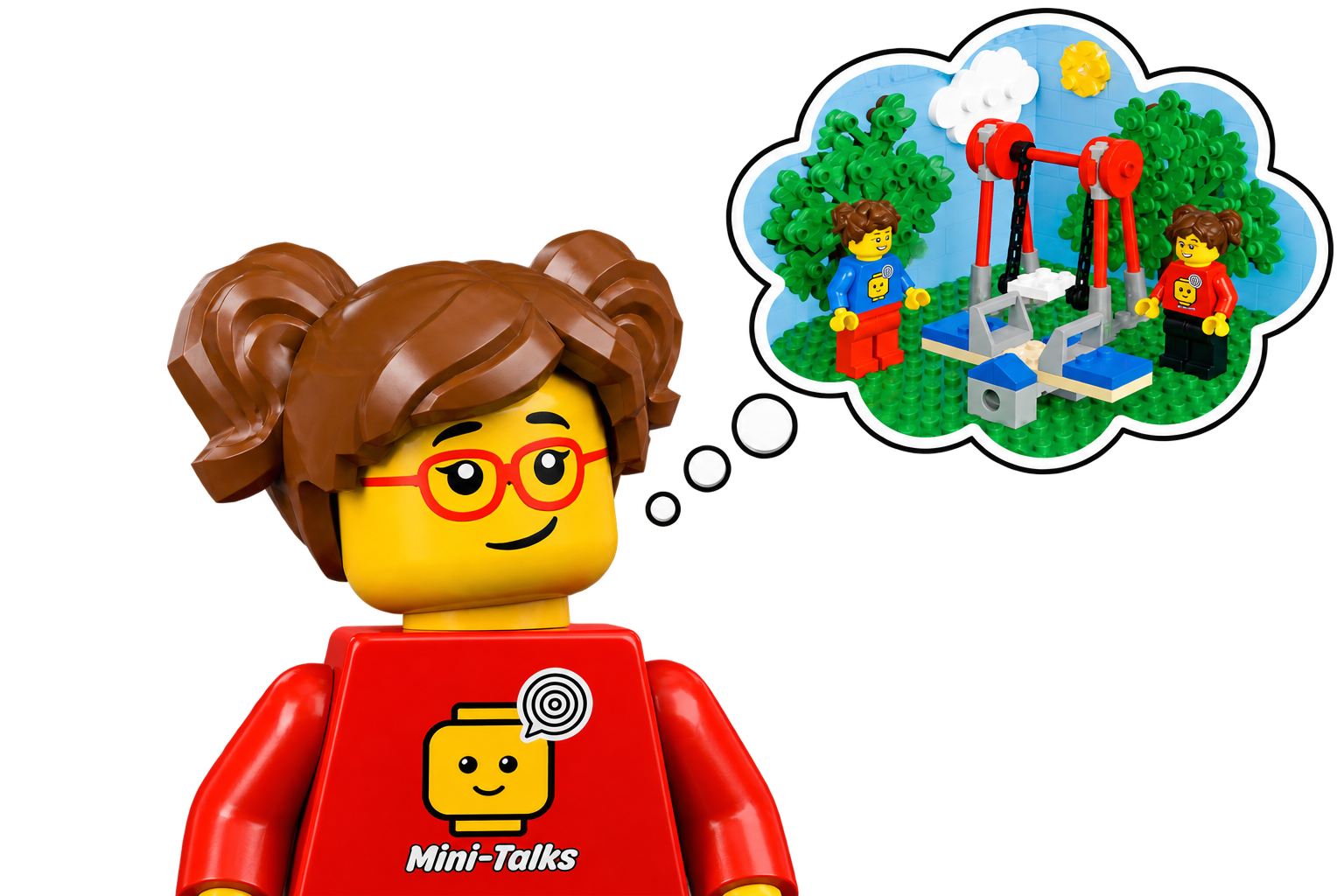
When possible, a Talk-Spot can have a Mini-Design inspired by the place itself.
The Mini-Design can be kept safely at the venue and brought out when a child would like to use it.
A child who has their own Mini can bring it into the scene, connecting something familiar with the real place around them.
Talk-Spots and Mini-Designers can work together to turn real places into LEGO®-based Mini-Designs.
A Talk-Spot can share photos and details of the venue so the setting can be translated into a Mini-Design.
Mini-Designers can create a scene inspired by that environment, together with Digital Building Instructions and a parts list.
Talk-Spots follow a few simple principles designed to make everyday participation more understanding and pressure-aware.
Children may join, observe, play, point, gesture, write, or communicate in other ways.
Avoid putting a child on the spot or making speaking the condition for participation.
Allow interaction to develop naturally without independently setting communication goals.
A child’s communication, diagnosis, and personal information should be treated with care.
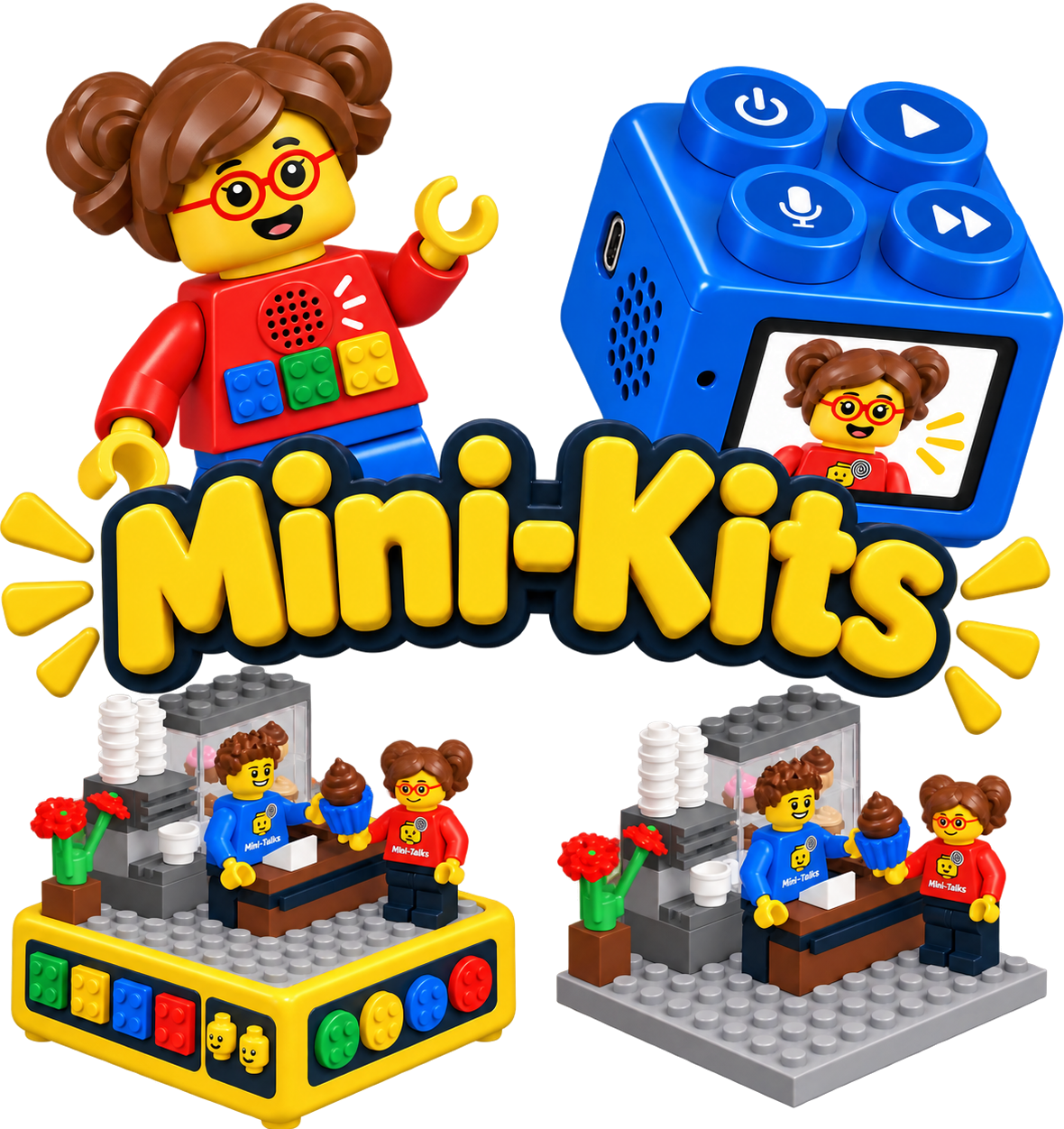
Talk-Spots may also request Mini-Kits when they could support a Mini-Talks activity, event, or community use at the venue.
Mini-Kits requests are considered separately through the Mini-Kits Request Form , based on intended use and available resources.
Being a Talk-Spot does not make a venue a therapy or clinical service.
Talk-Spots do not set communication goals, assess children, or replace a child’s existing professional support.
Their role is to create more understanding everyday places where different ways of participating are welcome.
Talk-Spots
Join Talk-Spots and help connect Mini-Community with everyday places where children and families already spend time.




 English
  Turkish
  German
  Danish